 |
|
Growing
Orchids Outside
|
|
Give
your orchids a vacation by moving them
outdoors! Even if you're not among the fortunate ones
who live
in mild weather all year round, your orchids can still benefit from
being outside in the summer. Brighter light, more
humdity, cool
evenings - your orchids will love it!
First, some
basics on moving plants outdoors:
- The outdoor season
is from
mid-May
to late September. Don't
stretch it. Mimium temperatures for most orchids is 45 degrees (55 for
Phals). Moving plants in and out to protect them from freezing does
more harm than good.
- Plants need time to
acclimate. Ease your plants
into their new home outdoors. Start with total shade for all plants.
Then,
gradually move the high light plants into more sun. Burn spots on the
leaves can happen quickly. Think of your first day on the beach after a
long winter.
- Don't
worry about
the heat. If your plants are
protected from direct sun and get good air circulation, heat shouldn't
be a
problem.
- Grow on benches
or tables, not on the ground.
Protect your plants from creepy
crawlers.
|

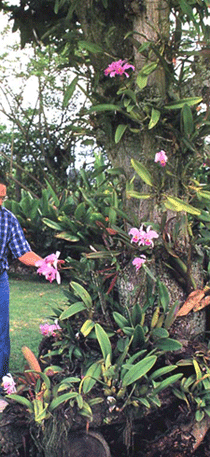
Orchids growing
outside
naturally |
|
Growing
Orchids
Outside with Hydroponics |
|
Many people ask about growing
their hydroponic orchids outside during the summer. Hydroponic orchids
thrive
outside! Why? It's those remarkable LECA pebbles.
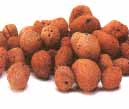
- LECA pebbles
are ceramic and will not rot or decay in any kind of weather.
- They allow for
extra moisture in the system so plants won't dehydrate on hot
days.
- LECA pebbles
tolerate heavy rain showers.
- Because
they're a sterile ceramic they won't
attract insects.
|

Leca Pebbles
|
|
Growing orchids outside with traditional media (bark or moss) means
altering your water schedule whenever the weather changes. This can be
a tricky business. If the weather is hot and dry, your plants will
demand watering everyday. On the other hand, if the weather is
cool and rainy, they can easily become waterlogged.
Ignore the elements and your plants will suffer.
Who has the time to watch the weather everyday? What about vacations
and weekends at the beach?
Hydroponics eliminates
the burden of constantly
attending to your plants. Our system stores
water for those hot, dry days. Everyday watering is not needed. At the
other extreme, bacterial or
fugal diseases are never a problem in cool,
damp
weather because our LECA pebbles will never
rot or decay.
Hydroponics has many advantages for growing outside. So let's
get started.
|

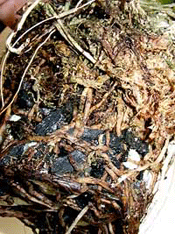
Decaying roots in
moss
and charcoal
from too much rain
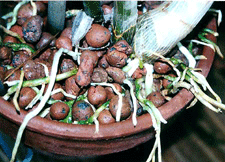
Healthy roots growing in LECA |
|
Setting
Up
the
Hydroponic System for Outdoors
The biggest issue with using our system outside is the Outer Pot
collecting
too much water when it rains. (Of course this won't be a problem if
your plants are protected from the rain.)
Under
normal growing conditions indoors, the decorative outer container acts
as a reservior, storing the
nutrient solution for the plant. The water gauge tells you when and how
much to water. Overwatering is never a problem - just give the system
plenty of time to dry out between regular waterings.
Outside, if your
plant is not sheltered from the rain, there's no control over how much
water the system collects. Frequent rain showers
can fill
up
the outer pot and overflow the system. Too much water and the roots
will suffer, even with LECA pebbles.
Collecting too much water can be avoided by simply removing
the outer pot and replacing
it with a shallow saucer. If the plant gets too much
water from frequent rain showers (or even the garden hose),
the
excess overflows and drains away. No chance of collecting too much
water. Perfect!
Here's how we set
up our plants for growing
outside. |

Typical setup for
indoors with Deorative Outer Pot and Water Gauge
|
|
Method #1. |
|
|

Let's set up this
Catlleya for outside
We're going
to use a clay pot
for the outer pot. The weight
of the clay pot will stabilize the plant and keep it from blowing over
in the wind. Always choose an outer pot with a drainage hole in
bottom. |

Remove plant,
culture pot, and
water gauge from the outer pot. |
|

Replace
outer pot with plastic
saucer.
|

Before using the
saucer, cut it to only 1/2" deep
(the same depth as watering to "opt" on gauge). |
|

Insert shallow
saucer into outer pot |

Set plant, culture
pot,
and water gauge into clay pot. |
|

Setup
is complete for
outside growing. Shallow saucer under culture pot holds just enough
water - excess will overflow and drain away through hole in bottom.
Heavy outer pot stabilizes the plant. |
|
|
For
a more finished appearance, the "pot inside another pot" look can be
camouflaged. (Note:We prefer keeping bottom of pot visable. Judging
water requirements is easier when you can see what's going on at the
bottom.) |
|

Fill gap between
pots
with extra
pebbles. |

New plant
ready for
outside! |
|
Plant
Care for Outside Growing |
|
|
Finding
the right
spot for your plants outside is important. Protecting your plants from
sun, wind, and other elements can be a challenge. Don't leave
it to trial and error. |
|
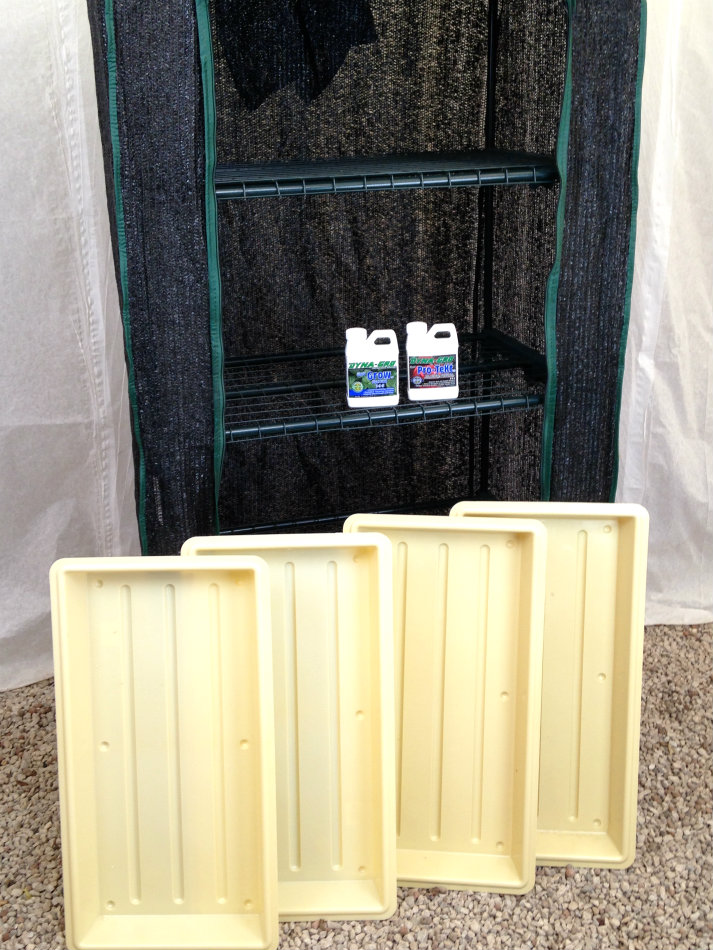
Our Mini
Greenhouse
for Growing Orchids
Outdoors is perfect for 20-25
plants. We "field
tested" it at the
greenhouse last summer and
were impressed with the
results.

What makes our mini-greenhouse unique is its shade cloth covering.
Sheilds your plants from the sun and wind - the
perfect
environment for
your orchids. Zipper door makes for easy access. And it's only
$69.00!
Find out more at www.hydro-orchids.com/lc-mini-greenhouse.html |
|
|
|
|
|
After
gettng setup
for outside
growing, let's look at how we're going to care for the plants. Summer
months are the active growing season for most orchids, especially if
they're outside. This means making some adjustments. care. |
|
Light: Light
outside is much stronger and more intense than indoors. For
the first couple of weeks, protect all plants by
putting them in total shade. Even "high light" orchids such
as Cattleya and
Dendrobium. In a couple of weeks, after they acclimate to
being
outside, you can move
the high
light plants into more sun. A couple hours of early morning or late
afternoon sun is ideal. Dappled sunlight is throughout the
day
also works. Always avoid direct midday sun on all your
plants -
even high light plants
will burn. |

Example of
dappled
sunlight,
perfect for most orchids |
|
Water:
As the system
fills up with water (from your watering or rain showers), any excess
water will simply drain away. So there's never a worry about
overwatering -
even with the garden hose!
You'll still need to establish a wet/dry cycle however (roots
need
air!). So be sure to wait until system
drys out completely before rewatering. (Think about how orchids grow in
nature. As they cling to rocks and trees, their roots are exposed to
the wind, drying them out between rain showers.)
If your orchids are exposed to rain and stay wet for a week or more, a
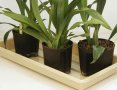
forced "dry period" is recommended. With individual
pots, use one hand to steady the plant and hold the pebbles in place,
then dump
out all the water. If you're using trays, remove plants and
pour
out excess water. Don't rewater for several days. |
 |
|
Temperatures: Don't
move your orchids outside until evening temperatures stay above the
50-55 degree range. There is absolutely no advantage to bringing your
plants outside early and then schlepping them back inside on cold
nights.
Don't worry too much
about midday heat as long as your
plants are shaded. Mother
nature designed most orchids to handle the
heat. Air moving over the leaves helps the plant stay cool. A
gentle shower from the garden hose always helps too. |
|
|
Nutrients:
Because the plants are actively growing, we apply full strength
nutrients every watering. (We use and recomend Dyna-Gro 7-9-5,
1/2
tsp.
per gallon.) Occassional rain showers will flush the system and even
things
out. During the summer months, we also add Pro-Tek (1/2 tsp. per
gallon) to
the nutrient solution. Pro-Tek adds silicon, making
the
plants more heat tolerant and drought resistant.
|

Healthy
roots on a
Cattleya
(from last summer). |
Tips for growing several common varietes outdoors. If you're
unsure about moving your plants outside, start by trying Dendrobium,
Cattleya, or Epidendrium at first.
| Plant Type |
Plant Care |
Comments |
| Dendrobiums |
Temperature
tolerant. High light plants but avoid
mid-day sun. |
Among our
favorites for moving outside. |
| Cattleya |
Temperature
tolerant. High light plants but avoid
mid-day sun. |
Among our
favorites for moving outside. |
| Epidendums |
Excellent outdoor
plants. |
|
| Oncidiums |
They love it
outdoors - especially in the
mini-greenhouse! Be more generous with water. They'll take 2-3 times
more. |
Fast growers
outdoors. Move crowded plants to bigger
pots for outdoor growing. |
| Paphiopedilums |
Not a good
candidate for outdoors unless protected from
sun and rain. Don't like temps below 55 degrees. |
|
| Phalaenopsis |
Should be
completely protected from sun and rain. Don't
like temps below 55 degrees. |
Standing water in
center of plant causes crown rot. In
nature these plants grow sideways on rocks and trees - no
water
collects in crown. |
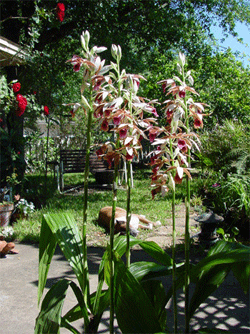
| Phiaus |
Excellent for
outdoor growing. Total shade. Keep moist. |
Used in outdoor
lanscapes in tropical climates. |
|